


Section 1: The Emergence of AI in Contemporary Art
Art has always been a reflection of human creativity and expression. From the cave paintings of our ancestors to the intricate sculptures of the Renaissance, art has continuously evolved with the changing times. In recent years, there has been a significant shift in the art world with the emergence of Artificial Intelligence (AI). This revolutionary technology has opened up new possibilities for artists, challenging traditional notions of creativity and the role of the artist. In this article, we will explore the intersection of creativity and AI in contemporary art and its impact on the art world.
Section 2: Redefining Creativity with AI
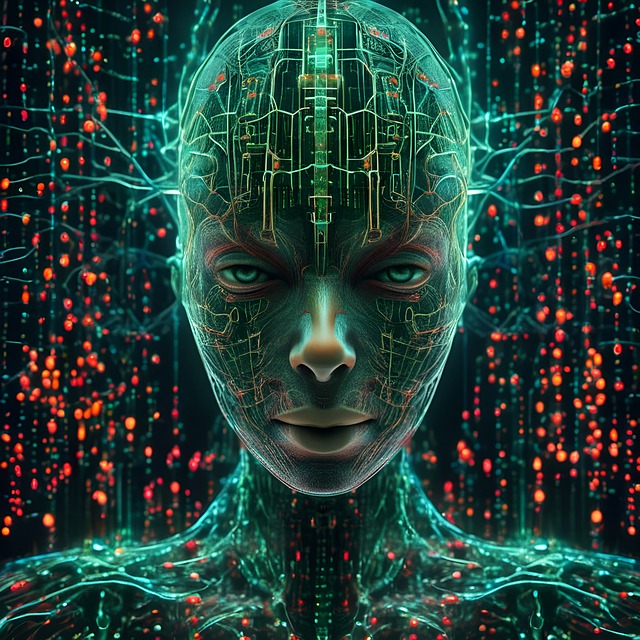
Traditionally, creativity has been seen as a distinctly human trait, something that sets us apart from machines. However, with the advancements in AI, this notion is being challenged. AI algorithms are now capable of generating original and complex works of art, blurring the lines between human and machine creativity. This has sparked a debate among artists and critics about the role of AI in art and whether it can be considered a form of creativity.
One of the pioneers in using AI in art is the French collective, Obvious, who made headlines in 2018 when their AI-generated painting, “Portrait of Edmond de Belamy,” sold for a staggering $432,500 at Christie’s auction house. The painting, created using a Generative Adversarial Network (GAN), was trained on a dataset of 15,000 portraits from the 14th to 20th centuries. This sparked a discussion about the role of the artist in creating art and whether an AI-generated artwork can be considered as valuable as a human-made one.
Section 3: Collaborating with AI
While some artists view AI as a threat to their creativity, others see it as a tool to enhance their artistic practice. Many contemporary artists are now collaborating with AI, using it as a medium to create their artworks. One such artist is Refik Anadol, who creates mesmerizing installations that blend data, machine learning, and light. Anadol’s work challenges our perception of reality and explores the relationship between humans and machines.
Another artist, Mario Klingemann, uses AI to create digital artworks that are constantly evolving and changing. His “Memories of Passersby I” is an AI-generated installation that creates ever-changing portraits of people passing by. Klingemann sees AI as a collaborator, rather than a tool, and believes that it can bring a new perspective to the creative process.
Section 4: The Ethical Implications of AI in Art
As with any new technology, the use of AI in art raises ethical concerns. One of the main concerns is the potential for AI to perpetuate existing biases and stereotypes. Since AI algorithms are trained on existing datasets, they can inherit the biases present in those datasets. This can lead to AI-generated artworks that reinforce societal prejudices and stereotypes.
Moreover, there is also a fear that AI could replace human artists, leading to a decline in the value of human creativity. However, many argue that AI can never replace the unique and complex emotions and experiences that humans bring to their art. Instead, it can be seen as a tool to augment and enhance the creative process.
Section 5: The Future of AI in Contemporary Art
The use of AI in art is still in its early stages, and its full potential is yet to be explored. As AI technology continues to advance, we can expect to see more groundbreaking and thought-provoking artworks created with the help of AI. The use of AI in art also raises questions about the definition of art and what it means to be creative. Will we see a time when AI-generated artworks will be indistinguishable from human-made ones?
In conclusion, the intersection of creativity and AI in contemporary art is a fascinating and ever-evolving topic. While some view AI as a threat to traditional notions of art and creativity, others see it as a tool to push the boundaries of what is possible. As AI technology continues to advance, it will be interesting to see how it will shape the art world and challenge our understanding of creativity. Ultimately, it is up to us to embrace this new technology and use it to create meaningful and thought-provoking art.